WHAT IS MEDITATION?

"Calmness is the ideal state in which we should receive all life's experiences," writes Paramahansa Yogananda (1893-1952), founder of the Self-Realization Fellowship, in the book Inner Peace. Yogananda is regarded as one of the great spiritual teachers melding East and West. Through meditation, he writes, one can cultivate a wonderful inner quiet that will melt away stress and nervousness.
http://health.howstuffworks.com/wellness/stress-management/how-to-get-started-with-meditation.htm
Meditation are techniques designed done to promote relaxation, contact spiritual guides, build internal energy, receive psychic visions, get closer to God, see past lives, take astral journeys, and develop feelings of compassion, love, patience, generosity and forgiveness. Meditation has been practiced since antiquity as a part of numerous religious traditions and rituals.
WHY MEDITATE?
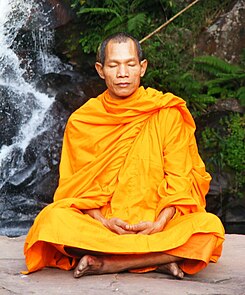
Though meditation is something very ancient, it is something that we all need to take a breather from the demands of modern life. Being stressed and over fatigued makes us unhappy, impatient and frustrated, which can even affect our health. Making time for meditation actually makes us calmer and more focused enough to find some inner peace and balance.Through meditation, we can transform our mind from negative to positive, from disturbed to peaceful, from unhappy to happy. This is something you can enjoy throughout the day, not just during meditation.
When we don't meditate, the untrained mind can be compared to a wild horse. It runs away when we try to find it, shies when we try to approach it. Communication is possible between the horse and the rider (between the mind and the self), but the horse needs to be trained to become a willing participant in the relationship.
Thus, the trained mind is strong, flexible, and workable because it can stretch beyond where it feels comfortable, it's responsive-not reactive-to challenges. This workable mind can be applied in all aspects of our lives, such as our living, relationships and spiritual path.
TYPES OF MEDITATION (http://www.mayoclinic.com/health/meditation/HQ01070)
- Guided meditation. Sometimes called guided imagery or visualization, with this method of meditation you form mental images of places or situations you find relaxing. You try to use as many senses as possible, such as smells, sights, sounds and textures. You may be led through this process by a guide or teacher.
- Mantra meditation. In this type of meditation, you silently repeat a calming word, thought or phrase to prevent distracting thoughts.
- Mindfulness meditation. This type of meditation is based on being mindful, or having an increased awareness and acceptance of living in the present moment. You broaden your conscious awareness. You focus on what you experience during meditation, such as the flow of your breath. You can observe your thoughts and emotions but let them pass without judgment.
- Qi gong. This practice generally combines meditation, relaxation, physical movement and breathing exercises to restore and maintain balance. Qi gong (CHEE-gung) is part of traditional Chinese medicine.
- Tai chi. This is a form of gentle Chinese martial arts. In tai chi (TIE-chee), you perform a self-paced series of postures or movements in a slow, graceful manner while practicing deep breathing.
- Transcendental meditation. You use a mantra, such as a word, sound or phrase repeatedly silently, to narrow your conscious awareness and eliminate all thoughts from your mind. You focus exclusively on your mantra to achieve a state of perfect stillness and consciousness.
- Yoga. You perform a series of postures and controlled breathing exercises to promote a more flexible body and a calm mind. As you move through poses that require balance and concentration, you're encouraged to focus less on your busy day and more on the moment.
ELEMENTS OF MEDITATION
1. Posture
Whether sitting on a chair or cross-legged on the floor, the spine should be upright with the head up. If you are slumped your mind will drift. Mind and body are intertwined. If your body is well-balanced, your mind will also be in balance. To straighten up, imagine that your head is touching the sky.
Whether sitting on a chair or cross-legged on the floor, the spine should be upright with the head up. If you are slumped your mind will drift. Mind and body are intertwined. If your body is well-balanced, your mind will also be in balance. To straighten up, imagine that your head is touching the sky.

2. Eyes
Try and keep your eyes open. Open eyes allow you to be more present. Just lower your eyes and let your gaze be soft. If you close your eyes you will be more likely to drift away on thoughts and stories. However, it’s important to do what is comfortable for you. Some people find closing their eyes much more effective. It’s good to experiment and see what feels best for you.
3. Focus
To focus in meditation means to pay soft attention to whatever you place in the center of awareness. I suggest using the breath as a focus. It’s like a natural door that connects ‘inside’ and ‘outside’. Zen Master Toni Packer says: Attention comes from nowhere. It has no cause. It belongs to no one.
 4.The Breath
Paying attention to the breath is a great way to anchor yourself in the present moment.
Notice your breath streaming in and out. There’s no need to regulate the breath – just let it be natural.
5. Counting your Breath
If you are having difficulties settling, you can try counting the breath – which is an ancient meditation practice. On your outbreath, silently count “one”, then “two”, and up to “four”. Then return to “one”. Whenever you notice your thoughts have strayed far away or you find yourself counting “thirtythree”, simply return to “one”. In this way, “one” is like coming home to the present moment. It’s good to return without a backward glance.
If you are having difficulties settling, you can try counting the breath – which is an ancient meditation practice. On your outbreath, silently count “one”, then “two”, and up to “four”. Then return to “one”. Whenever you notice your thoughts have strayed far away or you find yourself counting “thirtythree”, simply return to “one”. In this way, “one” is like coming home to the present moment. It’s good to return without a backward glance.
6. Thoughts
When you notice thoughts, gently let them go by returning yous focus to the breath. Don’t try and stop thoughts; this will just make you feel agitated. Imagine that they are unwelcome visitors at your door: acknowledge their presence and politely ask them to leave. Then shine the soft light of your attention on your breath.
When you notice thoughts, gently let them go by returning yous focus to the breath. Don’t try and stop thoughts; this will just make you feel agitated. Imagine that they are unwelcome visitors at your door: acknowledge their presence and politely ask them to leave. Then shine the soft light of your attention on your breath.
7. Emotions
It’s difficult to settle into meditation if you are struggling with strong emotions. The way to deal with strong emotions in meditation is to focus on the body feelings that accompany the emotion. Let go of the stories and refocus on your body. In this way you are honouring your emotions but not becoming entangled in stories.
It’s difficult to settle into meditation if you are struggling with strong emotions. The way to deal with strong emotions in meditation is to focus on the body feelings that accompany the emotion. Let go of the stories and refocus on your body. In this way you are honouring your emotions but not becoming entangled in stories.
8. Silence
Silence is healing. I know that there are is a lot of ‘meditation music’ around, but nothing beats simple silence. Otherwise the music or sounds on the tape just drown out the chatter in your mind. When we sit in silence we actually get to experience what our mind is doing. There is steadiness and calmness that comes from sitting in silence. In time outer and inner silence meet and you come to rest in the moment.
 9. Length
Start with 10 minutes and only sit longer if you feel that that is too short. Don’t force yourself to meditate longer if you are not ready to do that. In time you might like to extend your meditation to 25 minutes. That’s a length that allows you to settle your mind without causing too much stress on your body.
10. Place
It’s lovely to create a special place to sit. You can even make a shrine or an altar that you can face when you sit in meditation. You might like to place a candle on your altar and objects that have meaning to you. It’s lovely to find objects for your altar as you walk. Maybe you find stones, or seashells, or flowers that speak to you.
It’s lovely to create a special place to sit. You can even make a shrine or an altar that you can face when you sit in meditation. You might like to place a candle on your altar and objects that have meaning to you. It’s lovely to find objects for your altar as you walk. Maybe you find stones, or seashells, or flowers that speak to you.
11. Enjoyment
Most of all it’s important to enjoy meditation. You might like to try sitting with a hint of a smile. Be kind to yourself. Start sitting just a little each day. It’s helpful to establish a daily habit.
Benefits of Meditation
Importance of Meditation is for Spiritual Growth:
- The direct benefits of meditation can include:
- Improved physical, emotional and mental health
- Focused and clear thinking
- Improved memory
- Enhancing a sense of self and personal presence
- Increased emotional balance
- Greater relaxation and ease
- More equanimity in the face of challenges
- Satisfaction in life
- An improved sense of spiritual fulfillment and awakening.
(http://www.in5d.com/5-reasons-why-meditation-is-a-habit-you-cant-afford-not-to-develop.html)

1. Learning to stop the constant thinking of our minds gives our brains' a much needed rest. When we stop the perpetual mind-traffic divine guidance can actually get through. This state of thoughtless awareness allows us recognize the presence of the observer - who is our true self, higher self or soul.
Perceiving our lives through the consciousness of the observer gives us the detachment we need to see how the ego-self contributes to the difficulties we may be facing in our relationships, career and other areas of our lives. The observer is purely consciousness without judgment.
2. Meditation brings our emotions into balance which is the state of being centered. When we're centered we let go of extremes; highs and lows of emotion that pull us into the future or past. We return to a natural calm state of being.
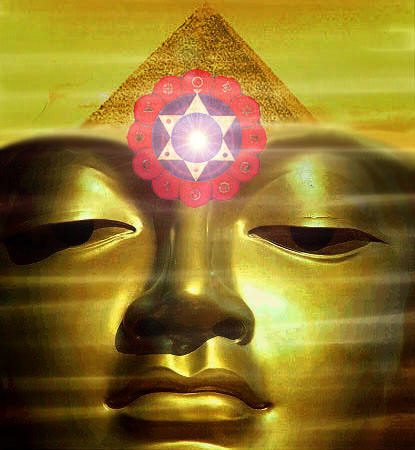
3. When we're centered we live in the present with acceptance of what is happening in our lives. We stop assigning a negative or positive meaning to what we may be encountering and therefore are less likely to be pulled into dramas (both yours and other people's) regarding these events.
4. The process of meditating will help you to remember your dreams. Many times answers and spiritual guidance are delivered through dreams. Sometimes I have only a snippet of a dream that I know was important when I wake, but if I meditate right away I can usually recall the entire dream.
5. Daily practice of meditation heightens intuitive ability. The more often you receive intuitive insight the more you will be in tune with your higher self and true purpose. Your life will flow more easily and opportunities to act upon your purpose will present themselves more frequently.
Meditation Practices vs. Meditation Itself
(http://health.howstuffworks.com/wellness/stress-management/how-to-get-started-with-meditation3.htm)
The techniques described here are meditation practices rather than meditation itself, which is often described by experienced practitioners as "a state of being — a state of receptivity without expectation, a merging with the Divine." All of the techniques are practice to get to this final merged state.
Therefore, meditation practice is not meditation. One might practice meditation for years to achieve a meditative state of being. An experienced meditator might meditate for an hour to achieve a few moments of meditative consciousness.
SOURCES:
http://www.naturaltherapypages.com.au/cognitive/Meditation
http://www.freemeditation.com/meditation-basics/
http://en.wikipedia.org/wiki/Meditation
http://www.how-to-meditate.org/
http://www.mayoclinic.com/health/meditation/HQ01070
http://goodlifezen.com/2008/04/18/how-to-start-meditating-ten-important-tips/
http://health.howstuffworks.com/wellness/stress-management/how-to-get-started-with-meditation.htm
http://www.shambhala.org/meditation/faqs.php#whatismeditation
http://www.betterhealth.vic.gov.au/bhcv2/bhcarticles.nsf/pages/Meditation
http://www.in5d.com/5-reasons-why-meditation-is-a-habit-you-cant-afford-not-to-develop.html
Pictures from:
http://www.ewallpapers.co/meditation-temple-wallpapers
http://balancedprofessional.com/tag/meditation/
http://www.yogaonthebrazos.com/meditation-workshop
http://angelicview.wordpress.com/tag/meditation/
http://www.freemeditation.com/meditation-basics/
http://en.wikipedia.org/wiki/Meditation
http://www.how-to-meditate.org/

No comments:
Post a Comment